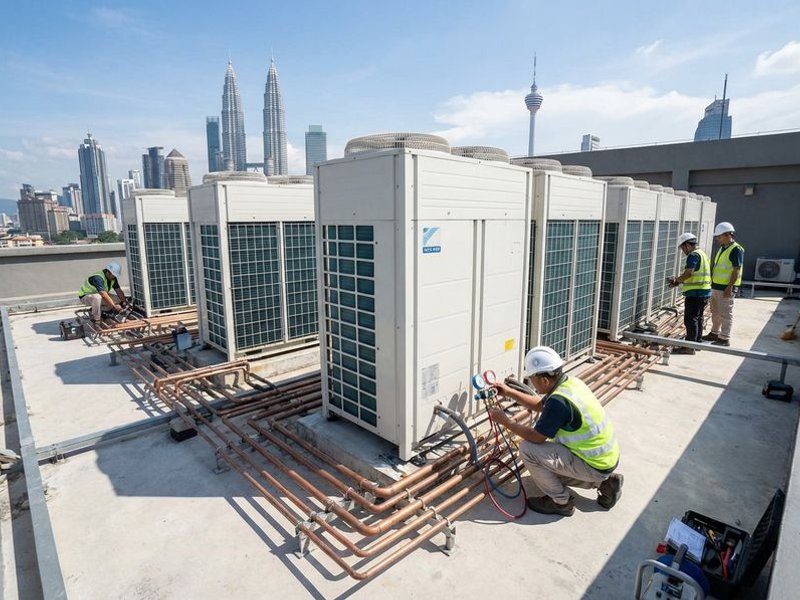
Some commercial cooling decisions are simpler than others. If you are managing an office or retail space in Malaysia, you likely face two constant challenges: the sweltering tropical heat and the rising cost of electricity. With Tenaga Nasional Berhad (TNB) implementing tariff adjustments in 2025 and the Imbalance Cost Pass-Through (ICPT) mechanism affecting commercial bills, energy efficiency is no longer just a “green” goal—it is a financial necessity.
This brings you to the choice between VRV and VRF systems. You have likely seen these acronyms on quotes from contractors or in Green Building Index (GBI) reports.
They represent the most efficient way to cool medium-to-large commercial spaces, but the terminology can be confusing. This guide will break down exactly what these numbers mean and give you the insider strategies to negotiate a fantastic deal on your first-time car lease.
This guide will clarify the differences, explain why they matter for your TNB bill, and help you choose the right system for your building.
VRV vs VRF: The Simple Answer
There is no technical difference between the two.
- VRV (Variable Refrigerant Volume) is a trademarked term owned by Daikin, the Japanese manufacturer that invented the technology in 1982.
- VRF (Variable Refrigerant Flow) is the generic term used by every other manufacturer (like Panasonic, Mitsubishi, and Toshiba) to describe the same technology.
If a contractor offers you a “VRV” system, they are proposing Daikin equipment. If they offer “VRF,” they are pitching another brand. Both refer to a sophisticated air conditioning system that connects multiple indoor units to a single outdoor condenser loop, varying the refrigerant flow to match the exact cooling demand of each room.
How These Systems Save Money
Traditional commercial air conditioning works like a standard light switch: it is either 100% on or 100% off. When your office gets slightly too warm, the compressor kicks in at full power, consuming maximum electricity. When it cools down, it shuts off completely. This constant start-stop cycle causes massive energy spikes.
VRV/VRF systems function more like a dimmer switch or the accelerator of a car.
The Inverter Advantage
Instead of stopping and starting, the compressor runs continuously at varying speeds. If a meeting room needs only a little cooling, the system slows down, consuming just enough power to maintain the temperature.
- Precise Load Matching: The system can run at as low as 10-20% capacity if demand is low.
- Reduced Wear: Fewer start-stop cycles mean less strain on the compressor, which is the most expensive component to replace.
- Consistent Comfort: You avoid the uncomfortable temperature swings where a room alternates between freezing and stuffy.
Why Malaysian Businesses Are Switching
For property owners in Kuala Lumpur or Penang, the decision often comes down to operational costs.
1. Combating High Electricity Tariffs
Under the current TNB tariff structure for commercial users (Tariff B, C1, or C2), electricity costs can be a significant overhead. VRV/VRF systems are proven to reduce energy consumption by 30% to 50% compared to conventional split units or older packaged systems. For a medium-sized office floor paying RM 5,000 monthly in electricity, these savings can offset the higher installation cost within 3-5 years.
2. Humidity Control
Malaysia’s average relative humidity often exceeds 80%. Standard air conditioners struggle to dehumidify without overcooling the room (making it freeze). VRV/VRF systems manage refrigerant flow so precisely that they can maintain a comfortable humidity level (ideally 60-70% for GBI standards) without turning the office into an icebox.
3. Space Efficiency for Shoplots and Offices
Real estate is expensive, especially in the Golden Triangle or mature areas like Bangsar.
- No Plant Room Needed: Unlike water-cooled chillers, you do not need a dedicated room for pumps and cooling towers.
- Long Piping Runs: You can place the outdoor units on the roof of a 10-storey shoplot and run piping all the way to the ground floor. Some systems allow piping lengths of up to 1,000 metres.
4. Smart Management
Most modern systems integrate with building management systems (BMS). A facility manager can monitor every indoor unit from a central tablet, setting limits so staff cannot set the temperature to 16°C and waste energy.
Insider Tip: If you are aiming for Green Building Index (GBI) certification, installing a high-efficiency VRV/VRF system contributes significantly to your Energy Efficiency (EE) and Indoor Environmental Quality (EQ) points.
Popular Brands in Malaysia
While the technology is similar, each brand has specific strengths in the local market.
| Brand | System Name | Key Feature | Best For |
|---|---|---|---|
| Daikin | VRV A / VRV X Series | The original inventor. Widest network of spare parts and trained technicians in Malaysia. | Buyers prioritizing long-term support and parts availability. |
| Panasonic | FSV-EX (Flexi System VRF) | Features nanoe™ X technology, which inhibits bacteria and viruses—a major selling point for post-pandemic offices. | Healthcare facilities and offices focused on air quality. |
| Mitsubishi Electric | CITY MULTI | Known for the “replace” technology that allows reusing existing copper piping from old R22 systems. | Renovation projects replacing old systems without hacking walls. |
| Toshiba | SMMS-u | Excellent partial load efficiency and compact chassis design. | Buildings with limited rooftop space. |
Is VRV/VRF Right for Your Building?
These systems are powerful, but they are not the universal solution for every property.
It Is the Ideal Choice If:
- You manage a multi-zone space: Such as an office with separate meeting rooms, executive cabins, and open working areas.
- You have variable occupancy: For example, a hotel where occupancy fluctuates between 30% and 90%. The system adjusts its energy use automatically.
- You own a high-rise shoplot: The long piping capability makes it the standard choice for 4-5 storey commercial lots in Malaysia.
You Might Reconsider If:
- The space is small: For a single open-plan office under 1,500 sq ft, high-end cassette split units are cheaper to install and simpler to maintain.
- Budget is the only priority: The initial capital expenditure (CapEx) for VRV/VRF is 2-3 times higher than standard split units. The payoff is in the Operational Expenditure (OpEx).
Installation: The Critical Factor
The most common reason for VRF failure in Malaysia is not the equipment; it is poor installation.
- Copper Pipe Insulation: In our humid climate, proper insulation is non-negotiable. If the installer uses thin or low-grade insulation, condensation will form on the pipes, leading to water dripping through your ceiling plaster ceilings. Insist on Class 1 (Armaflex or K-Flex) insulation with adequate thickness (at least 1 inch for gas pipes).
- Nitrogen Pressure Testing: Before releasing refrigerant, the installer must pressure test the pipes with nitrogen to ensure there are absolutely no leaks. A tiny leak in a VRF system can shut down the cooling for the entire floor.
- Refnet Joints: These systems use specialized Y-joints (Refnets) to split the gas flow. Using generic T-joints to save money disrupts the gas flow balance and will damage the compressors over time.
Maintenance Requirements
You cannot neglect a VRV/VRF system like a home wall unit. Because all indoor units share a common refrigerant network, one major failure can affect the whole system.
The “Jelly” Problem
A specific issue in Malaysia is the formation of “jelly” or algae slime in the drain pans due to high humidity and organic dust.
- Quarterly Chemical Cleaning: This is essential to prevent water leaks.
- Piping Checks: Technicians must check for refrigerant leaks annually. Since the system holds a large volume of gas, a recharge is expensive.
Expected Costs: While a standard wall unit service costs RM 60-80, servicing a VRF cassette unit typically costs RM 120 - RM 180 per unit for chemical cleaning. We strongly advise signing a yearly maintenance contract that includes emergency breakdown support.
Learn more about our VRV/VRF system maintenance services.
Common Questions
Can I mix brands, like a Daikin outdoor unit with Panasonic indoor units? No. The communication protocols (the electronic language the units use to talk to each other) are proprietary. You must use the same brand for the entire system.
Does a VRF system heat the room? Most systems in Malaysia are “Cooling Only” models. However, “Heat Recovery” models exist that can cool the server room while heating water for the hotel showers, though these are more expensive and complex.
What is the lifespan of these systems? With proper maintenance, a VRV/VRF system lasts 15 to 20 years. This is significantly longer than the 7-10 year average lifespan of cheaper inverter split units.
Conclusion
Whether you call it VRV or VRF, investing in variable refrigerant technology is one of the smartest decisions for a commercial property in Malaysia. The initial premium you pay buys you lower TNB bills, GBI-compliant efficiency, and a level of comfort control that standard units cannot match.
The key to success lies in choosing a reputable brand and, more importantly, a certified installer who understands the unique demands of our tropical climate.
Need help choosing or maintaining a VRV/VRF system? Our commercial HVAC team has extensive experience with all major brands. Contact us for a consultation.
Need This Service?
Ready to put these tips into action? Our professional technicians are here to help.
Learn More About Our Service