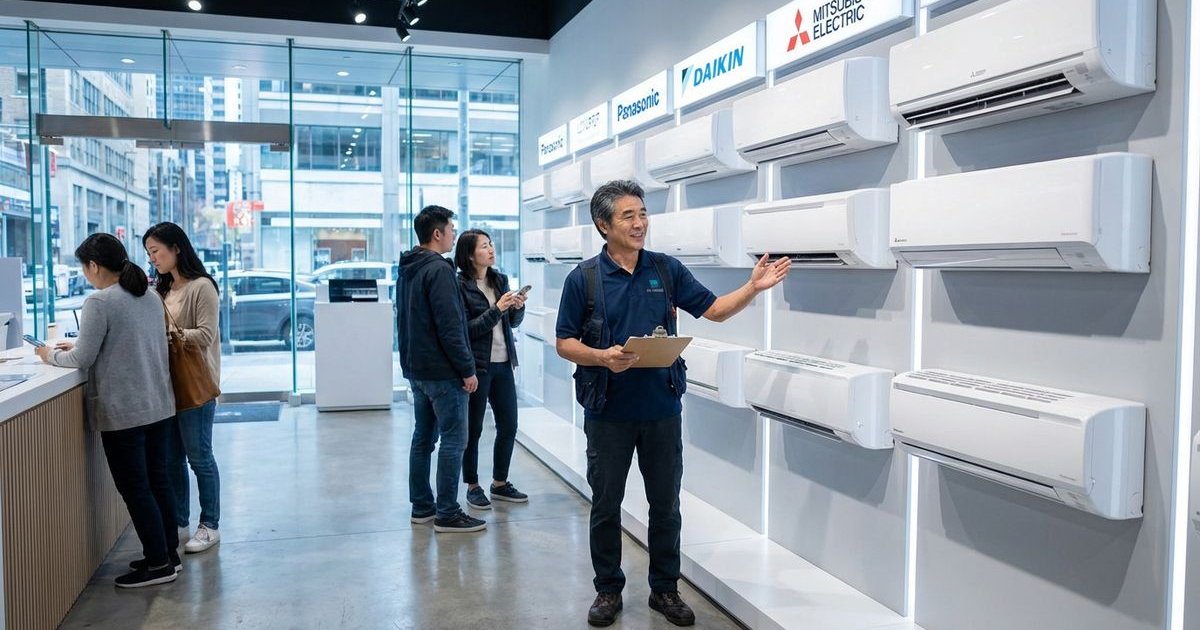
Aircond brands Malaysia, best air conditioner Malaysia, Daikin vs Panasonic vs Mitsubishi, energy saving aircond, inverter aircond Malaysia, aircond technician review
Best Aircond Brands in Malaysia: Comparison Guide
Which Aircond Should You Buy?
Choosing an air conditioner in Malaysia involves more than just picking a cool brand name. It is about survival in our tropical heat. As technicians who service these units daily, we know that a shiny brochure often hides a nightmare of expensive parts and frequent breakdowns.
This guide cuts through the marketing noise. We will show you which brands actually last, which ones save you money on your TNB bill, and which ones our technicians secretly install in their own homes. We compare the top players like Daikin, Panasonic, and Mitsubishi to help you secure a unit that cools fast and stays running.
Top Brands Overview
| Brand | Origin | Price Range (1.5HP Inverter) | Best For |
|---|---|---|---|
| Daikin | Japan | RM 1,800 - 3,500+ | Durability & efficiency seekers |
| Panasonic | Japan | RM 1,400 - 2,800 | Air quality & smart features |
| Mitsubishi | Japan | RM 2,000 - 4,000+ | Silence & premium build |
| LG | Korea | RM 1,300 - 2,500 | Energy saving tech |
| Samsung | Korea | RM 1,300 - 2,400 | Wind-free comfort & design |
| York | USA | RM 1,200 - 2,200 | Heavy-duty durability |
| Acson | Malaysia | RM 900 - 1,800 | Local reliability & value |
| Midea | China | RM 700 - 1,500 | Tight budgets & rentals |
Detailed Brand Analysis
Daikin 🏆
Best For: Homeowners who want a “install and forget” unit that handles heavy daily usage.
The Tech Behind the Name: Daikin is effectively the Toyota of the aircond world. Their FTKF Series is the gold standard for reliable inverter technology in Malaysia. A standout feature is the Gin-Ion Blue Filter, which treats the filter with positive ions to trap and neutralize viruses. Their circuit boards are also famously tough against Malaysia’s occasional power surges.
Technician’s Take:
“Daikin units are workhorses. We rarely see major compressor failures on well-maintained units, even those running 12 hours a day for over a decade. The parts are everywhere, meaning you will never wait weeks for a repair.”
Pros:
- Robust Circuit Boards: Handles voltage fluctuation well.
- Smart Control: The Go Daikin app is stable and easy to use.
- High Efficiency: consistently high energy ratings (5-star options available).
Cons:
- Price: You pay a premium for the reliability.
- Design: Indoor units look plain compared to Korean brands.
Panasonic
Best For: Families with children or allergy sufferers who prioritize air quality.
The Tech Behind the Name: Panasonic differentiates itself with Nanoe-X technology. Unlike standard filters, this system actively releases hydroxyl radicals to inhibit bacteria and viruses even when the cooling is off (fan mode). Their X-Deluxe Inverter series also features the ECO+AI sensor, which adjusts cooling power based on room activity to save electricity.
Technician’s Take:
“Panasonic is our most-serviced brand because they are so popular. We notice that the cooling coils on models with Nanoe-X tend to stay cleaner for longer because the tech inhibits mold growth inside the unit.”
Pros:
- Air Purification: Nanoe-X is a legitimate health feature.
- Service Network: Massive support network across Malaysia.
- App Integration: The Comfort Cloud App is excellent for controlling multiple units.
Cons:
- Noise: Slightly louder fan noise at maximum speed compared to Mitsubishi.
- Cost: Advanced features like Nanoe-X bump up the price tag.
Mitsubishi Electric
Best For: Light sleepers and master bedrooms where silence is non-negotiable.
The Tech Behind the Name: If silence is your goal, the Mr. Slim series is the answer. These units operate at a whisper-quiet 19dB, which is quieter than a library. They also feature a Dual Barrier Coating on the fan and heat exchanger. This prevents dust and grease from sticking, which maintains efficiency over time.
Technician’s Take:
“Mitsubishi owners often call us thinking their unit is broken because they cannot hear it running. It is that quiet. The build quality is exceptional, but be warned that spare parts can be pricey if something does break.”
Pros:
- Silence: The quietest operation in the market.
- Maintenance: Dual Barrier Coating reduces the need for chemical cleaning.
- Durability: Premium plastics and components feel solid.
Cons:
- Upfront Cost: Usually the most expensive option per horsepower.
- Parts: Fewer service centers than Panasonic or Daikin.
LG
Best For: Tech-savvy users who want maximum energy savings.
The Tech Behind the Name: LG’s claim to fame is the Dual Inverter Compressor. This tech allows the compressor to run at a wider range of frequencies. LG claims this saves up to 70% more energy and cools 40% faster than non-inverter models. You can also monitor your precise energy usage in real-time via the LG ThinQ app, which is great for managing monthly bills.
Technician’s Take:
“The Dual Inverter isn’t just marketing; we actually see lower amp draws on our meters. However, the plastic casing on the indoor units can feel a bit brittle. Be gentle when removing the cover to clean the filters.”
Pros:
- Energy Efficiency: Excellent savings for heavy users.
- Smart Features: Best-in-class mobile app connectivity.
- Warranty: Often comes with a 10-year compressor warranty.
Cons:
- Build Material: Plastics feel less premium than Japanese brands.
- Complexity: Advanced electronics can be harder for general technicians to diagnose.
Samsung
Best For: Design lovers and people who hate direct cold drafts.
The Tech Behind the Name: Samsung revolutionized comfort with WindFree technology. Once the room reaches the desired temperature, the main flap closes, and cool air is gently pushed through 23,000 micro air holes. This eliminates the harsh “blasting” sensation that many people dislike. The AI Auto Cooling feature also learns your usage patterns to optimize settings automatically.
Technician’s Take:
“WindFree is a game-changer for comfort, but it requires strict maintenance. Those 23,000 micro holes can get clogged with dust and mold if you miss your servicing. You must commit to a chemical wash every 6 to 12 months.”
Pros:
- Comfort: No cold wind hitting your skin directly.
- Aesthetics: Sleek, modern designs that look great on walls.
- Innovation: Unique features you cannot find elsewhere.
Cons:
- Maintenance: Requires more frequent cleaning to prevent mold.
- Cooling Speed: Some users feel it cools slower in WindFree mode.
York
Best For: Shop lots, offices, and open commercial spaces.
The Tech Behind the Name: York (now under Johnson Controls) focuses on raw cooling power. They are less about fancy features and more about moving cold air reliably. Their units are built with heavy-duty components designed to run all day in harsh conditions.
Technician’s Take:
“York units are loud and basic, but they are tough. We see them in restaurants and shops running 18 hours a day for years without complaint. If you need cold air and don’t care about silence, this is the one.”
Pros:
- Durability: Commercial-grade build quality.
- Price: Very competitive for the cooling power you get.
- Cooling: Strong air throw rapidly cools hot rooms.
Cons:
- Noise: Significantly louder than residential Japanese brands.
- Features: Lacks advanced filtration or smart sensors.
Acson
Best For: Budget-conscious buyers who still want reliable local support.
The Tech Behind the Name: Acson is a local Malaysian brand that was acquired by Daikin. This is a huge advantage. You are essentially getting Daikin-level technology and spare part availability at a lower price point. Their Avory series offers solid inverter performance, and the MyKool app provides wifi control, a feature rarely found at this price.
Technician’s Take:
“Acson is basically Daikin’s little brother. The internal components are very similar, making them reliable and easy to fix. It is the smartest choice if you want Japanese reliability on a Malaysian budget.”
Pros:
- Value: High quality-to-price ratio.
- Service: Parts are interchangeable with many Daikin models.
- Local Focus: Designed specifically for Malaysian housing needs.
Cons:
- Finish: Exterior plastics are simple and functional, not premium.
- Prestige: Lower resale value if you sell the house with units attached.
Midea
Best For: Rental properties and tight budgets.
The Tech Behind the Name: Midea has improved massively in recent years. Their Xtreme SavE series offers inverter technology at prices that beat almost everyone else. They use Prime Guard (Golden Fin) coating on their condensers, which resists corrosion better than standard blue fins, a big plus for Malaysia’s humid weather.
Technician’s Take:
“Midea is perfect for landlords. They are cheap enough to replace if a tenant breaks them, but reliable enough to not cause monthly headaches. Just don’t expect the plastic casing to stay white forever; it tends to yellow over time.”
Pros:
- Price: Unbeatable affordability.
- Corrosion Resistance: Golden Fin coating is standard on many models.
- Performance: Cooling is surprisingly good for the price.
Cons:
- Longevity: Electronics may not last as long as Japanese brands.
- Quality Control: Slightly higher chance of “lemon” units out of the box.
Our Rankings
Best Overall: Daikin
Unmatched quality and robust circuit boards make it the king of reliability.
Best Value: Panasonic
Japanese quality and excellent air purification without the premium Daikin price tag.
Best Budget: Acson
Daikin DNA and reliability at a price that fits Malaysian wallets.
Best Smart Features: LG
Dual Inverter technology paired with the excellent ThinQ app.
Best for Commercial: York
Built tough for heavy-duty daily use in shops and offices.
What We Install Most
Based on our installation requests from Malaysian homeowners:
- Panasonic (35%) - The brand trust is incredibly strong.
- Daikin (25%) - The preferred choice for new developments.
- Acson (15%) - The rising star for budget renovations.
- Midea (10%) - The default choice for rental units.
- LG (8%) - Popular with younger, tech-focused buyers.
- Others (7%) - Brands like Mitsubishi and Samsung.
Factors to Consider
1. The Real Cost of Energy Stars
Don’t ignore the star rating on the Energy Commission label. A 5-star inverter aircond can save you 20% to 30% on electricity compared to a 3-star model. If you run your unit for 8 hours a night, a 5-star model can pay for the price difference in electricity savings within two years.
2. Matching Usage to Brand
If you use the aircond every night, invest in Daikin or Panasonic. The electricity savings and durability will pay off. For a guest room used once a month, a budget Midea or Acson is the smarter financial move.
3. Room Location & Noise
For a master bedroom, pay the extra for Mitsubishi Electric or Panasonic. The silence is worth it for your sleep quality. For a living room or kitchen where the TV is on, a louder York or Daikin unit won’t be noticeable.
4. Service Availability
This is critical in Malaysia. Panasonic and Daikin have the widest network of technicians. If you buy a niche brand, you might wait weeks for a spare part to arrive from overseas while you sweat in the heat.
5. Warranty Details
Look closely at the compressor warranty. Good brands offer 5 to 10 years. However, check the general parts warranty too. Most are only 1 year, but some premium models extend this to 2 years, covering expensive circuit boards.
Our Honest Advice
If budget allows: Go for Daikin or Panasonic. You will save on electricity and repairs over the next 10+ years. It is a “buy once, cry once” investment.
If budget is tight: Acson offers the best quality-to-price ratio in Malaysia. You get reliable cooling without the brand-name markup.
For rentals: Stick to Midea or Acson. They are affordable to replace if tenants abuse them, and parts are cheap.
For offices: York is the way to go. It is built to run all day and handle the heavy load of a busy workspace.
Need help choosing? WhatsApp us your room size and budget. We will recommend the best fit for your specific needs.
Related Services: For more details on each brand’s specific service requirements, visit our Brands We Service hub page. When you’re ready to install, check out our aircond installation service for professional setup.
Need This Service?
Ready to put these tips into action? Our professional technicians are here to help.
Learn More About Our Service